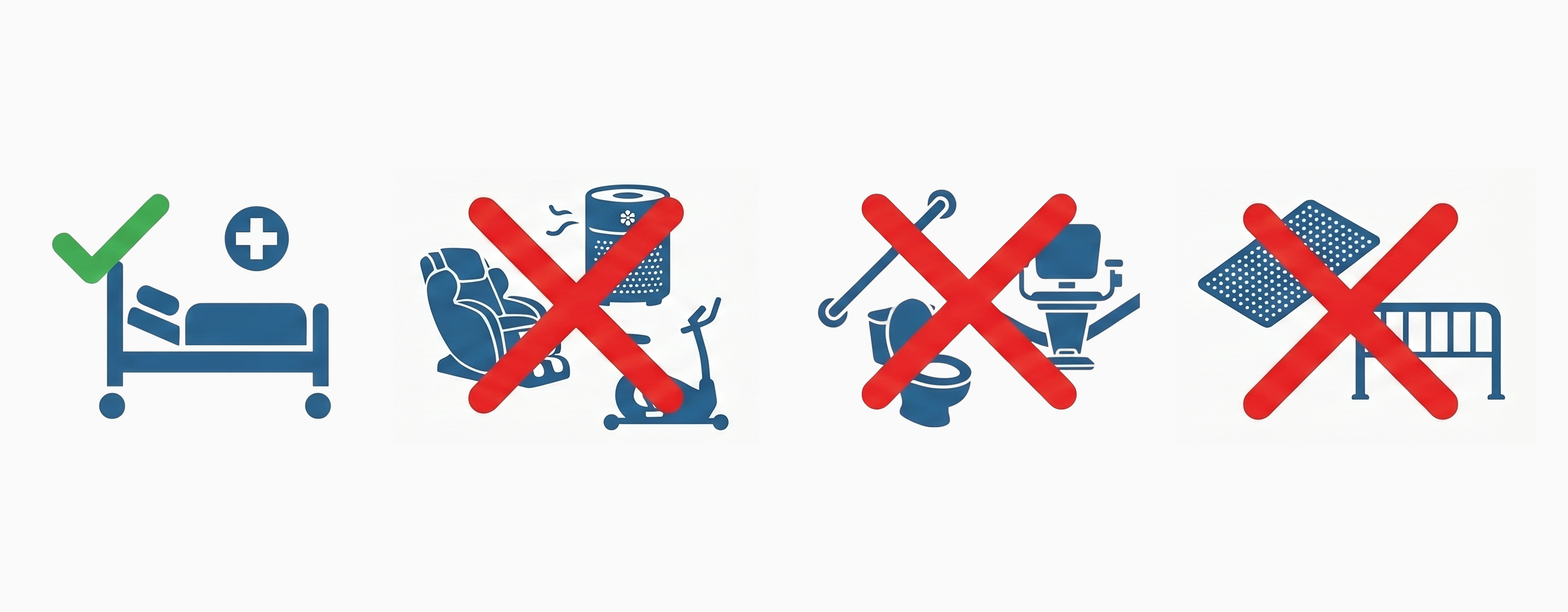
For most, movement is an afterthought: a seamless loop of signals firing from brain to muscle to guide our every step. That changes in an instant when an injury or age-related decline makes a simple walk across the kitchen feel like a challenge.
Press coverage, product updates, and expert insights designed to help DME and HME providers drive revenue with AI.

For most, movement is an afterthought: a seamless loop of signals firing from brain to muscle to guide our every step. That changes in an instant when an injury or age-related decline makes a simple walk across the kitchen feel like a challenge.

XiFin, Inc., a leader in AI-driven revenue cycle management (RCM), and Notable Systems, a developer of agentic AI automation for healthcare revenue cycle operations, announced a multi-year strategic AI alliance to develop and deliver purpose-built agentic AI capabilities across the XiFin® Empower AI RCM ecosystem.

The Centers for Medicare & Medicaid Services (CMS) is instituting a new round of competitive bidding for Durable Medical Equipment (DME), following the conclusion of the previous program in 2023. This fresh restart introduces significant structural changes, most notably transitioning from a regionalized model to a nationalized framework. Targeting a full implementation date of January 1, 2028, the program aims to consolidate suppliers and reduce reimbursement rates across five specific product categories.

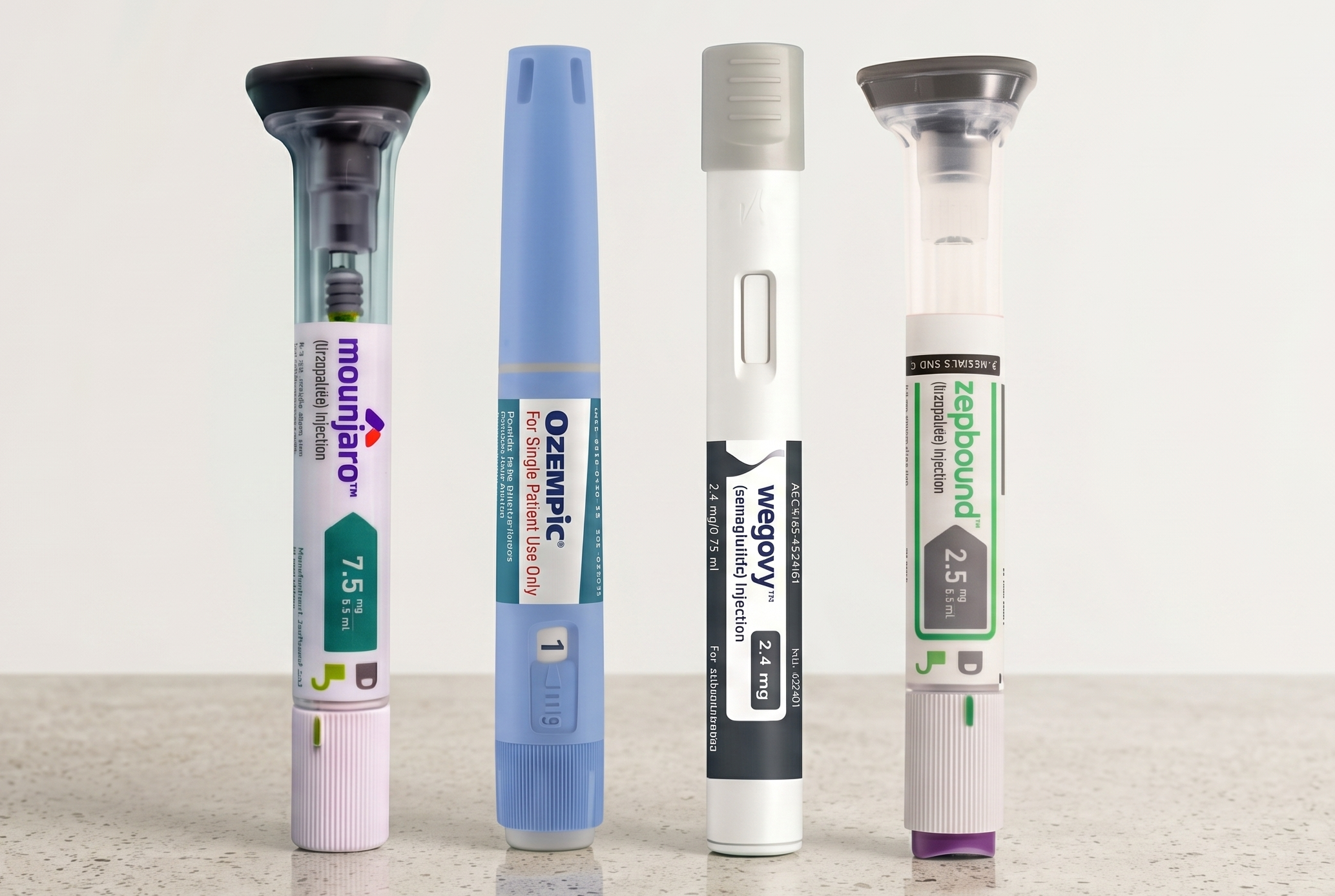
As GLP-1 medications gain ground in obesity and diabetes management, DME industry leaders have raised a pivotal question: Will a world with fewer obesity-related complications reduce demand for durable medical equipment? The short answer based on current market data is no. But the nuanced answer matters far more for DME operators preparing for change in patient workflows and device fitting.

In the course of an eight-year medical degree, the average physician receives only 30 to 45 minutes of training on the lymphatic system. This is a staggering educational gap for a system that serves as the body’s primary mechanism for removing toxins and waste.

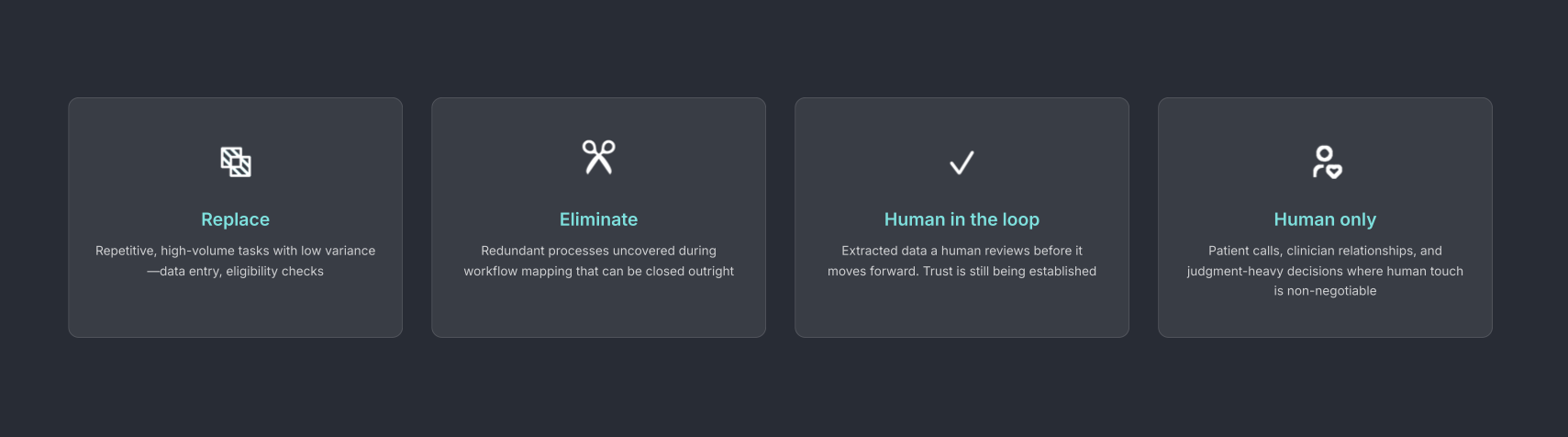
Many DME operators think about AI and automation as a single capability; a tool you flip on and suddenly everything runs faster. Then implementation starts, and the tool doesn’t quite look how you imagined it.The challenge with DME workflow automation is that no two operations are identical, and neither is the way AI fits into them. Some processes should be completely automated. Some should be eliminated entirely. Some need human judgment sitting alongside the machine and some should stay human-only because that's where your business actually lives.

In the clinical world, an orthopedic brace represents the ultimate form of stability, providing the mechanical support necessary for a patient to regain mobility after a traumatic ligament tear or complex surgery. In the business world of durable medical equipment, however, bracing is notoriously one of the highest fraud categories in healthcare, a reputation that has invited unprecedented scrutiny from federal regulators.

Most DME providers approach AI implementation with one question: How much will this save us? The better question: Is this actually making our operation better? The most successful implementations track success across three dimensions that paint a complete picture of whether your AI initiative is truly working. Here's what to measure beyond traditional revenue cycle management metrics.

Bone growth stimulators address a critical clinical need when fractures fail to heal, but DME providers face a complex maze of payer-specific compliance requirements and documentation delays. This creates significant operational risk for providers managing high-volume BGS claims.
.png)
The Medicare DMEPOS fee schedule sets the maximum amount Medicare will pay for covered durable medical equipment, prosthetics, orthotics, and supplies. Think of it as a pricing ceiling. Medicare pays the lesser of what you charge or what the fee schedule allows. Your actual reimbursement depends on the patient's location, the specific HCPCS code you use, whether competitive bidding applies, and which modifier you assign.

Becoming a DME provider means stepping into one of healthcare's most rewarding and most regulated businesses. If you're wondering what it takes to get Medicare approval, you've likely encountered a maze of acronyms, accreditation requirements, and compliance standards. This guide breaks down exactly what you need to know to navigate the process successfully.

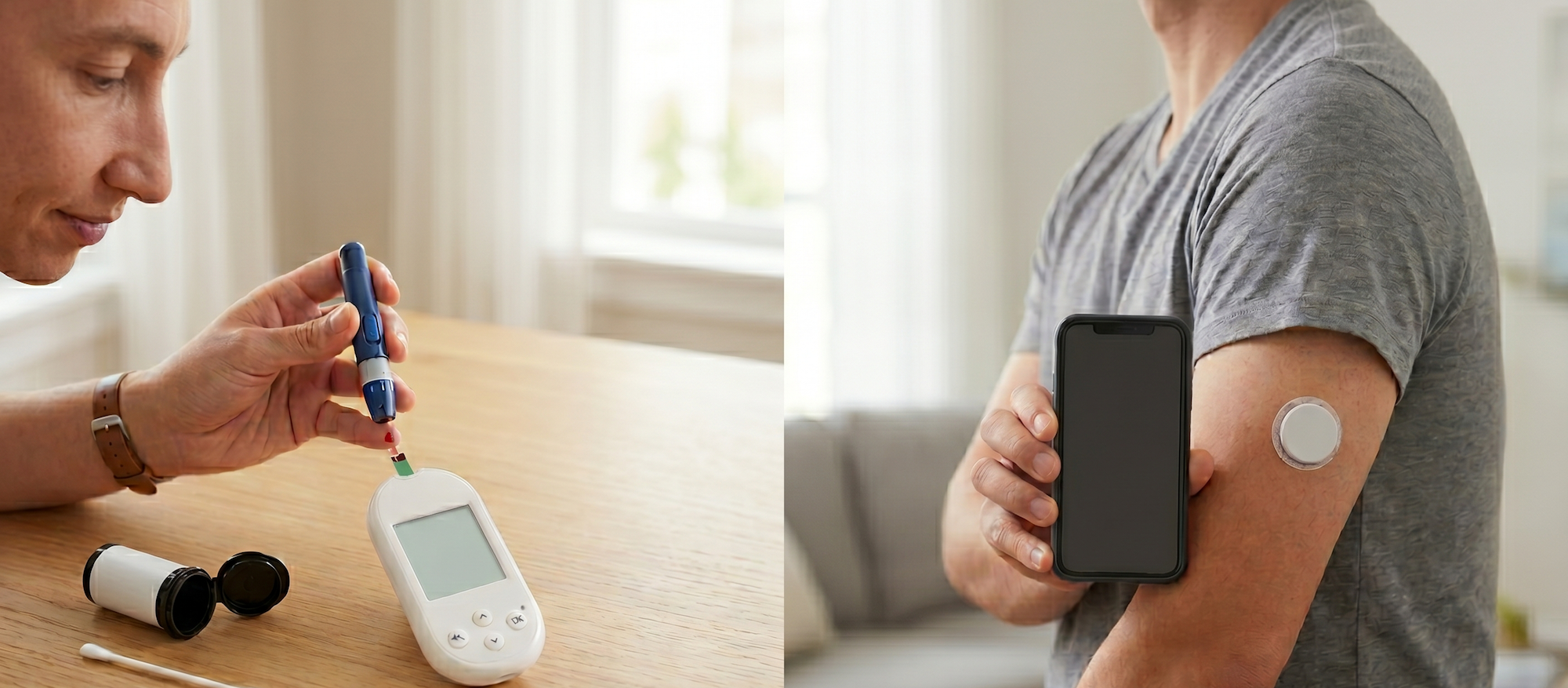
Medicare coverage for blood glucose monitors is one of the most commonly misunderstood areas of DME billing. Patients call asking if Medicare will cover their new continuous glucose monitor. Providers submit claims only to get denied for missing documentation. Billing specialists spend hours chasing down prior authorizations that should have been obtained upfront.

In 2025, Medicare laid out a new NCD for home ventilation. This CMS enacted change sent shockwaves throughout the DME/HME ecosystem, with suppliers scrambling to adapt to the new guidelines. Now, many months past the NCD's enactment, home equipment suppliers have begun to adjust to the change and react to the new complex landscape.

Medicare covers a lot of DME, but not everything, and the line between what qualifies and what doesn't isn't always obvious. When a provider delivers equipment assuming coverage, only to receive a denial weeks later, the damage is already done. The equipment is in the patient's home, the documentation was submitted, and now there's a dispute over who pays. These situations are frustrating, time-consuming, and completely avoidable. Knowing what DME is not covered by Medicare, and why, is one of the most practical steps a DME provider can take to protect their revenue cycle.


DME billing has never been a simple process, but 2026 brings a new set of changes that make staying current more important than ever. New enrollment rules, updated documentation requirements, and shifting Medicare standards are all in play this year.

Automation has become one of the most talked-about topics in DME. But talking about it and actually implementing it in a way that moves the needle are two very different things. Many providers try to automate everything at once and end up with a patchwork of tools that don't communicate well with each other. Others hold off entirely, overwhelmed by where to start.
.png)
Running a DME company has never been simple. The administrative side of running a DME company is a lot to manage. Compliance rules shift. Denial rates climb. Patient volumes grow. And the expectation to handle it all with leaner teams isn't going away.

If you're a DME supplier serving Medicare patients, competitive bidding isn't just a policy detail you can skim and file away. It shapes what you get paid, which products you can supply, and whether you’re able to operate in your market.

Documentation is the backbone of DME operations. Every claim you submit, every piece of equipment you deliver, and every dollar you collect depends on it.

Competitive bidding is reshaping the DME industry, and the operational playbook has changed. Margins that worked just a few years ago are being squeezed, and providers who wait to adapt risk falling behind as reimbursement pressures grow.

Obtaining a DME license is a major achievement for any healthcare provider. But the regulatory process can seem like a complicated maze. This guide outlines the key steps to obtain your DME certification, stay compliant, and use automation to keep your operations running efficiently.

Home Medical Equipment (HME) is what allows patients to recover, manage chronic conditions, and maintain independence at home. But if you've spent any time in the healthcare space, you've probably noticed that HME and DME (Durable Medical Equipment) are often used interchangeably. So what exactly is HME in healthcare, and how does it differ from DME?

Revenue cycle management (RCM) can make or break your healthcare organization's financial health. When your RCM processes run smoothly

Managing revenue cycle operations internally can overextend DME and HME providers. As they navigate the evolving

Launching a DME business means getting familiar with a complex web of regulatory requirements, licensing processes, and operational standards.

Revenue cycle management (RCM) is the comprehensive financial process DME/HME providers use to manage patient care transactions.

Durable Medical Equipment plays a vital role in modern healthcare, enabling patients to receive treatment and maintain independence at home.

Think of DME billing, also known as DME operations, as the bridge between patients who need medical equipment at home and
From the home of the Rock & Roll Hall of Fame, we invite you to join the HME News Business Summit's most notable gathering, the Notable Backstage Pass!

Wealth managers rely on data every day to inform their expert assessments, financial guidance, and strategic decisions.

One of the most vital aspects of the healthcare industry is the medical equipment millions of patients depend on to maintain a safe and secure standard of living.

Automation is revolutionizing the way companies across industries do work, from the most basic, routine tasks to the most complex processes.

Order forms, receipts, patient records, financial portfolios, legal transcripts—whatever form they take, documents are often a crucial part of a business’s operations.

Nearly every company has something in common: documents. From one-page digital receipts to 100-page paper case files and everything in between,

Data extraction may sound like a new concept, but from the start, data has been at the heart of effective wealth management.

Wealth managers are trusted for their ability to make informed predictions, provide expert financial guidance, and manage investments—but they can’t do it without data.

Companies today run on data. This data comes in a variety of forms and is often unstructured or contained in analog formats.

Providing medical equipment to patients comes with a heavy pile of paperwork, full of data that must be compiled and relayed in an accurate and timely manner.

Notable Systems, a pioneer in AI-powered RCM solutions, is proud to announce a strategic collaboration with Valere Health, a leader in healthcare technology solutions.
.png)
At Notable Systems, we’ve always believed healthcare professionals shouldn’t have to choose between helping patients and managing paperwork. Today, I’m excited to share an important milestone in Notable Systems’ journey: we’ve officially

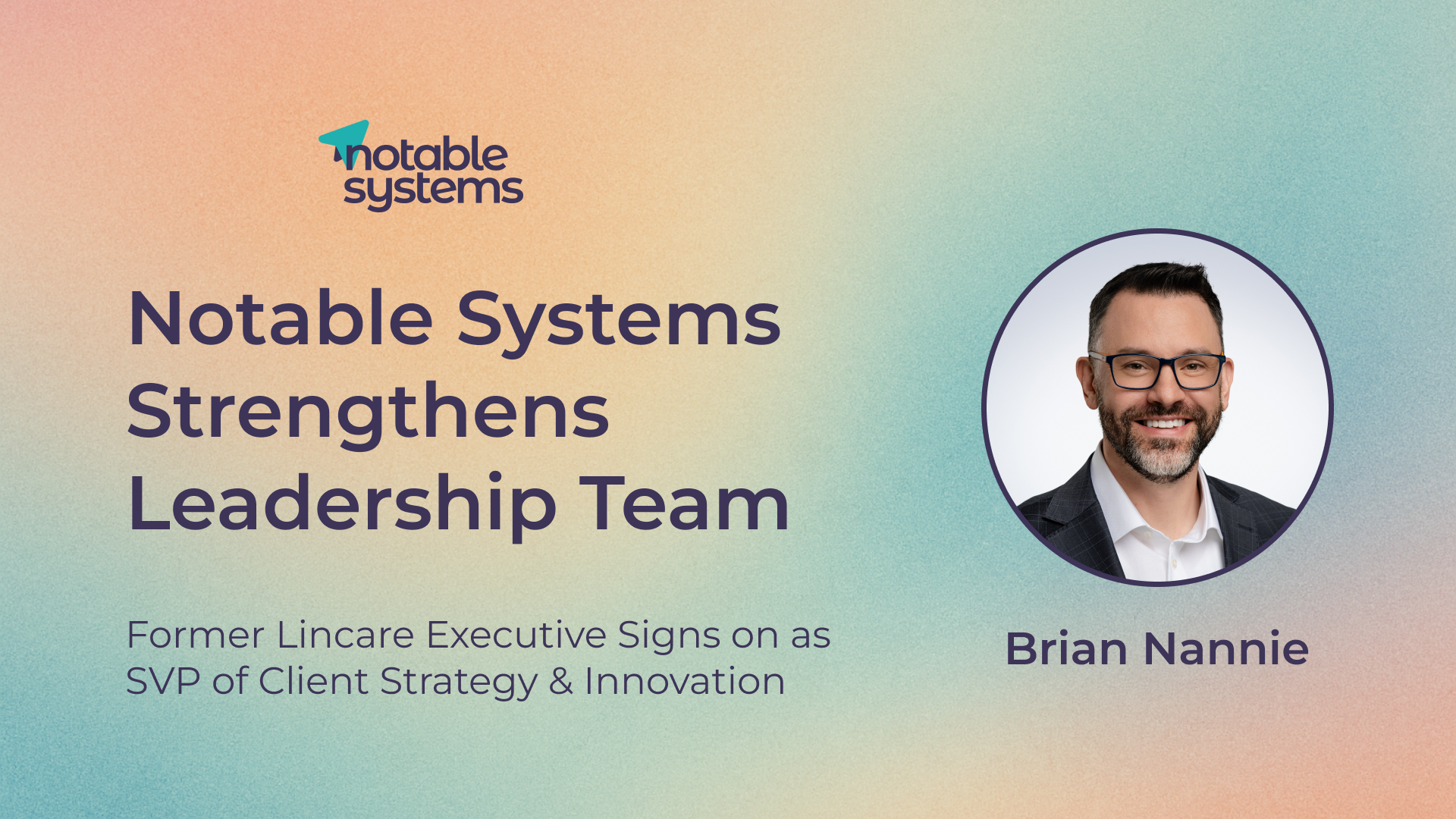
Notable Systems continues to expand its leadership team with deep expertise in DME, HME, and healthcare revenue cycle management.

Denied claims in healthcare, especially in the durable medical equipment (DME) space, create significant challenges for suppliers.

3 Ways to Streamline Medical Equipment Order Entry Using Automation

For most, movement is an afterthought: a seamless loop of signals firing from brain to muscle to guide our every step. That changes in an instant when an injury or age-related decline makes a simple walk across the kitchen feel like a challenge.

In the course of an eight-year medical degree, the average physician receives only 30 to 45 minutes of training on the lymphatic system. This is a staggering educational gap for a system that serves as the body’s primary mechanism for removing toxins and waste.

Many DME operators think about AI and automation as a single capability; a tool you flip on and suddenly everything runs faster. Then implementation starts, and the tool doesn’t quite look how you imagined it.The challenge with DME workflow automation is that no two operations are identical, and neither is the way AI fits into them. Some processes should be completely automated. Some should be eliminated entirely. Some need human judgment sitting alongside the machine and some should stay human-only because that's where your business actually lives.

In the clinical world, an orthopedic brace represents the ultimate form of stability, providing the mechanical support necessary for a patient to regain mobility after a traumatic ligament tear or complex surgery. In the business world of durable medical equipment, however, bracing is notoriously one of the highest fraud categories in healthcare, a reputation that has invited unprecedented scrutiny from federal regulators.

Most DME providers approach AI implementation with one question: How much will this save us? The better question: Is this actually making our operation better? The most successful implementations track success across three dimensions that paint a complete picture of whether your AI initiative is truly working. Here's what to measure beyond traditional revenue cycle management metrics.

Bone growth stimulators address a critical clinical need when fractures fail to heal, but DME providers face a complex maze of payer-specific compliance requirements and documentation delays. This creates significant operational risk for providers managing high-volume BGS claims.
.png)
The Medicare DMEPOS fee schedule sets the maximum amount Medicare will pay for covered durable medical equipment, prosthetics, orthotics, and supplies. Think of it as a pricing ceiling. Medicare pays the lesser of what you charge or what the fee schedule allows. Your actual reimbursement depends on the patient's location, the specific HCPCS code you use, whether competitive bidding applies, and which modifier you assign.

Becoming a DME provider means stepping into one of healthcare's most rewarding and most regulated businesses. If you're wondering what it takes to get Medicare approval, you've likely encountered a maze of acronyms, accreditation requirements, and compliance standards. This guide breaks down exactly what you need to know to navigate the process successfully.

Medicare coverage for blood glucose monitors is one of the most commonly misunderstood areas of DME billing. Patients call asking if Medicare will cover their new continuous glucose monitor. Providers submit claims only to get denied for missing documentation. Billing specialists spend hours chasing down prior authorizations that should have been obtained upfront.

Medicare covers a lot of DME, but not everything, and the line between what qualifies and what doesn't isn't always obvious. When a provider delivers equipment assuming coverage, only to receive a denial weeks later, the damage is already done. The equipment is in the patient's home, the documentation was submitted, and now there's a dispute over who pays. These situations are frustrating, time-consuming, and completely avoidable. Knowing what DME is not covered by Medicare, and why, is one of the most practical steps a DME provider can take to protect their revenue cycle.

DME billing has never been a simple process, but 2026 brings a new set of changes that make staying current more important than ever. New enrollment rules, updated documentation requirements, and shifting Medicare standards are all in play this year.

Automation has become one of the most talked-about topics in DME. But talking about it and actually implementing it in a way that moves the needle are two very different things. Many providers try to automate everything at once and end up with a patchwork of tools that don't communicate well with each other. Others hold off entirely, overwhelmed by where to start.
.png)
Running a DME company has never been simple. The administrative side of running a DME company is a lot to manage. Compliance rules shift. Denial rates climb. Patient volumes grow. And the expectation to handle it all with leaner teams isn't going away.

Documentation is the backbone of DME operations. Every claim you submit, every piece of equipment you deliver, and every dollar you collect depends on it.

Obtaining a DME license is a major achievement for any healthcare provider. But the regulatory process can seem like a complicated maze. This guide outlines the key steps to obtain your DME certification, stay compliant, and use automation to keep your operations running efficiently.

Home Medical Equipment (HME) is what allows patients to recover, manage chronic conditions, and maintain independence at home. But if you've spent any time in the healthcare space, you've probably noticed that HME and DME (Durable Medical Equipment) are often used interchangeably. So what exactly is HME in healthcare, and how does it differ from DME?

Revenue cycle management (RCM) can make or break your healthcare organization's financial health. When your RCM processes run smoothly

Managing revenue cycle operations internally can overextend DME and HME providers. As they navigate the evolving

Launching a DME business means getting familiar with a complex web of regulatory requirements, licensing processes, and operational standards.

Revenue cycle management (RCM) is the comprehensive financial process DME/HME providers use to manage patient care transactions.

Durable Medical Equipment plays a vital role in modern healthcare, enabling patients to receive treatment and maintain independence at home.

Think of DME billing, also known as DME operations, as the bridge between patients who need medical equipment at home and

Wealth managers rely on data every day to inform their expert assessments, financial guidance, and strategic decisions.

One of the most vital aspects of the healthcare industry is the medical equipment millions of patients depend on to maintain a safe and secure standard of living.

Automation is revolutionizing the way companies across industries do work, from the most basic, routine tasks to the most complex processes.

Order forms, receipts, patient records, financial portfolios, legal transcripts—whatever form they take, documents are often a crucial part of a business’s operations.

Nearly every company has something in common: documents. From one-page digital receipts to 100-page paper case files and everything in between,

Data extraction may sound like a new concept, but from the start, data has been at the heart of effective wealth management.

Wealth managers are trusted for their ability to make informed predictions, provide expert financial guidance, and manage investments—but they can’t do it without data.

Companies today run on data. This data comes in a variety of forms and is often unstructured or contained in analog formats.

Providing medical equipment to patients comes with a heavy pile of paperwork, full of data that must be compiled and relayed in an accurate and timely manner.

Denied claims in healthcare, especially in the durable medical equipment (DME) space, create significant challenges for suppliers.

3 Ways to Streamline Medical Equipment Order Entry Using Automation

As GLP-1 medications gain ground in obesity and diabetes management, DME industry leaders have raised a pivotal question: Will a world with fewer obesity-related complications reduce demand for durable medical equipment? The short answer based on current market data is no. But the nuanced answer matters far more for DME operators preparing for change in patient workflows and device fitting.

In 2025, Medicare laid out a new NCD for home ventilation. This CMS enacted change sent shockwaves throughout the DME/HME ecosystem, with suppliers scrambling to adapt to the new guidelines. Now, many months past the NCD's enactment, home equipment suppliers have begun to adjust to the change and react to the new complex landscape.

Competitive bidding is reshaping the DME industry, and the operational playbook has changed. Margins that worked just a few years ago are being squeezed, and providers who wait to adapt risk falling behind as reimbursement pressures grow.