

The Challenges of Billing Bone Growth Stimulators
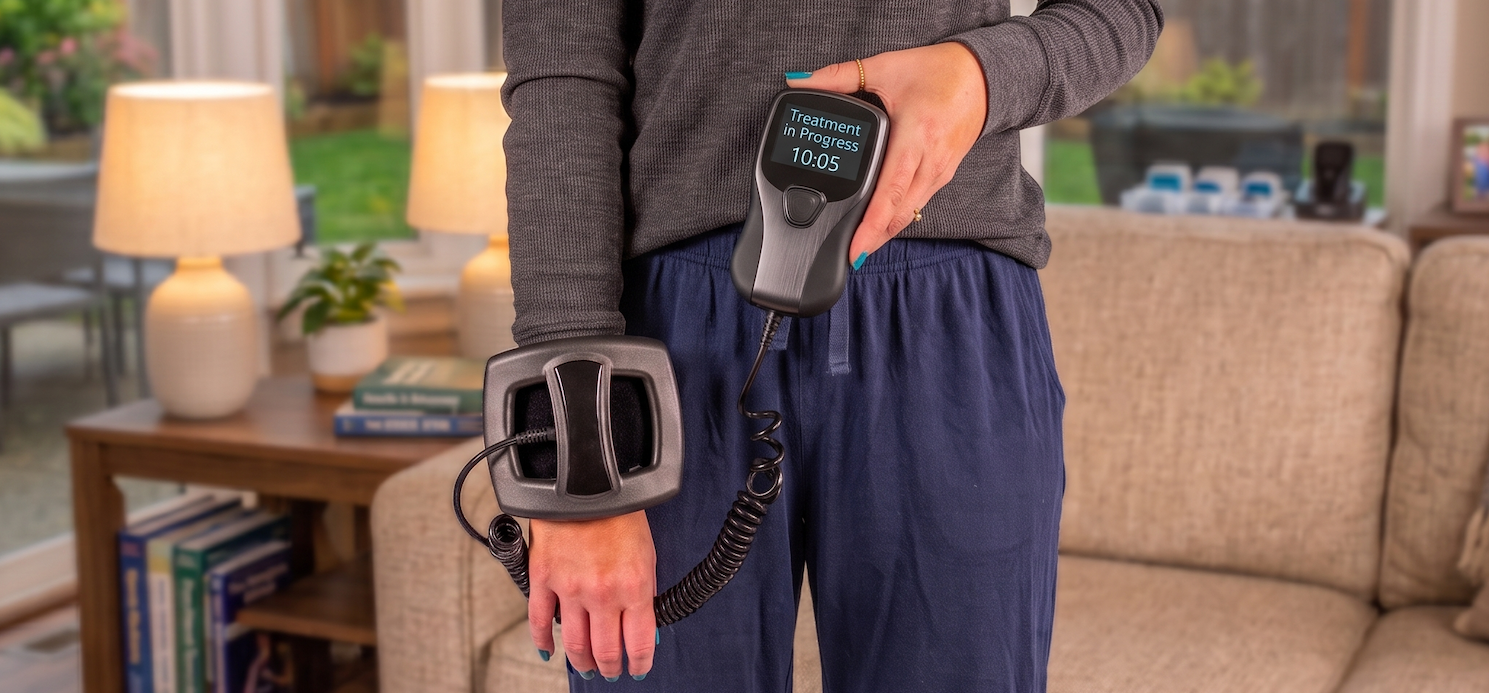
What is a Bone Growth Stimulator?
A broken bone typically follows a predictable path: six to eight weeks of standard treatment and the bone knits back together. But healing doesn’t always progress as expected. Fracture type, patient age, comorbidities, and other risk factors can all disrupt the healing process. Between 5% and 10% of fractures fail to heal on schedule, and some high-risk fracture types see even higher rates of failure.
When healing stalls, physicians have limited options. Surgery is invasive and risky, so they turn to Bone Growth Stimulators (BGS). These devices use electrical stimulation, pulsed electromagnetic fields, or low-intensity ultrasound to jumpstart the biological processes that have gone dormant. For patients whose fractures aren't progressing, a BGS offers a non-invasive alternative to a secondary procedure.
Understanding the Clinical Indications
In the clinical world, bone growth stimulators address two specific failure modes, both defined by the timeline of healing stagnation. A "delayed union" occurs when a bone shows a lack of healing progress over three to four months. If that progress remains stalled for six to nine months, it's classified as a "non-union." To qualify for a stimulator, a patient must typically provide multiple sets of X-rays proving a lack of visible progressive signs of healing.
While only a small percentage of total fractures fall into these categories, the high stakes of permanent disability make this a significant market, impacting between 300,000 and 600,000 patients annually in the U.S.
Types of Bone Growth Stimulators
Bone growth stimulators use advanced physics, pulsed electromagnetic fields and ultrasonic waves, to jumpstart biological processes that have gone dormant. The technology essentially hacks the body's cellular communication using three primary HCPCS-coded modalities:
- Electrical Stimulation & PEMF (E0747 & E0748): These units send electrical signals or use Pulsed Electromagnetic Magnetic Fields to stimulate osteoblasts (bone-forming cells). These high-end units are specifically reserved for difficult-to-heal non-unions and spinal fusions.
- Low-Intensity Pulsed Ultrasound (E0760): This modality uses acoustical mechanical energy to jumpstart biological growth. The E0760 is often indicated for "fresh" or stress fractures, distinguishing it from the more expensive PEMF units used for long-standing non-unions.
The ingenuity of using magnetic fields and ultrasonic waves to induce biological healing is undeniable, but the price tag creates a significant point of friction in the insurance landscape.
Reimbursement and Market Dynamics
The margin structure in BGS reimbursement is striking: while manufacturing costs (COGS) are estimated to be under $300, reimbursement rates can reach $4,000 to $5,000 per device. This high-value product creates a battleground in the outpatient market, where stakes are incredibly high for both providers and payers. For DME suppliers, wholesale costs typically run around $1,800, but claims can reimburse between $4,500 and $5,000. However, a single mistake in the complex authorization paperwork upfront can force providers to absorb the entire cost.
The Billing Complexity
The reimbursement landscape for bone growth stimulators is far more complex than the clinical indication itself. The administrative and regulatory framework surrounding it is a maze of contradictions, inefficiencies, and provider traps.
The Purchase Paradox
One of the most perplexing aspects of BGS policy is the "Purchase Paradox." In most sectors of healthcare, acute-use items, those needed for a short, finite period, are rented. However, due to rigid historical legislation, Medicare requires purchasing these devices outright.
Once a bone has successfully knit, the device, which is often size-specific, ends up in the back of a closet or listed on eBay. Medicare's rigid purchase only rule strictly limits patients to owning one device every five years. Even if a patient breaks their arm two years after their leg heals, Medicare won't cover a second device sized for their arm, forcing the patient into a costly self-pay situation.
The Built-in Expiration Date
To further complicate the ownership model, many manufacturers have engineered a "kill switch" directly into their hardware. Treatment protocols are programmed into the software to cap the device's usage. For example, a device may be programmed to stop functioning entirely after 1,000 hours of use. While this ensures devices are used exactly as prescribed and prevents a thriving secondary market, it creates a scenario where a patient technically owns a piece of high-tech hardware destined to become a paperweight.
This built-in expiration date is a primary reason why a rental market for these devices remains virtually non-existent despite the obvious fiscal benefits to patients. The device becomes obsolete once treatment concludes, yet the patient bears ownership liability.
Documentation Delays
While the technology can stimulate bone growth in just hours a day, the administrative process to get the device into a patient's hands moves at a glacial pace. The referral-to-cash journey is a gauntlet of documentation requirements that can span two to eight weeks.
Gathering all data associated with BGS, clinical notes, X-ray histories, and specific physician signatures, requires meticulous coordination between providers and payers. The delay is the result of "death by a thousand paper cuts": a missing signature or a slightly incomplete clinical note can restart the entire waiting period, leaving a patient in pain while the bureaucracy resets its clock.
Multi-Payer Compliance Burden
Beyond Medicare's challenges, the private payer landscape adds another layer of complexity. Different commercial payers, such as Aetna, UHC, Cigna, and BCBS plans nationwide, each have unique policy requirements for BGS coverage. What qualifies a patient as having a "non-union" may differ across payers. The documentation required to prove clinical need varies. Prior authorization timelines differ. Some payers may require different X-ray intervals or specific clinical notes from orthopedic surgeons rather than primary care physicians. A claim denial from one payer doesn't mean another will deny the same case. Providers often must customize their submission approach for each insurance carrier. Because the rules change from payer to payer, the opportunity for missing something increases dramatically.
This lack of standardization multiplies the administrative workload and the risk of failed claims exponentially. Because there are so many unique payer policies for bone growth stimulators, providers cannot rely on a single, standardized billing template. Instead, manually reviewing a patient's medical documentation to ensure it perfectly aligns with their specific payer's criteria can take up to 45 minutes per order. When a provider manages a high volume of BGS claims across dozens of different insurance carriers, this time investment becomes staggering. For billing teams already stretched thin, spending 45 minutes per chart is a massive operational drag.
The Financial Risk
The financial stakes compound every administrative challenge. With a wholesale cost of $1,800 and reimbursement ranging from $4,500 to $5,000, a single denied claim represents a loss of thousands of dollars. For high-stakes, high-margin claims like these, providers can’t afford to guess at compliance or hope documentation is sufficient. They must invest heavy administrative effort upfront to ensure every claim meets the specific criteria of each payer. On the back end, providers also can't afford to let documentation failures go unaddressed. They typically chase down appeals when claims are denied rather than simply writing them off, unlike other cheaper items such as a basic knee brace. This creates a vicious cycle: the higher the stakes, the more resources must be devoted to claims management, and the financial risk falls entirely on the DME provider.
How Claims Manager Helps
DME billing compliance for bone growth stimulators is a game of shifting targets. Rather than a single standard, providers must navigate an ever-changing set of reimbursement criteria.
Notable Systems’ Claims Manager eliminates these bottlenecks by acting as an intelligent compliance layer. Powered by AI trained by our internal billing experts, it evaluates bone growth stimulator orders against 25+ unique, payer-specific coverage criteria tailored to each DME provider, all before submission. This includes major commercial payers like Aetna, UHC, Cigna, and BCBS plans nationwide.
By shifting verification to the front of the workflow, Claims Manager catches missing signatures, incomplete clinical notes, and non-compliant X-ray intervals instantly. This ensures only audit-proof documentation moves forward.
For high-stakes, high-margin devices like bone growth stimulators, this automation translates directly to revenue protection. While the broader DME industry abandons up to 65% of denied claims, BGS providers pursue every one. The margins are too high to write off, forcing teams into costly, exhaustive appeals. Claims Manager prevents this by increasing first-pass clean claim rates. By replacing continuous, manual rework with a built-in intelligence layer, providers can reduce DSO and scale their BGS business without proportionally scaling their administrative team.
Ready to scale with confidence? Book a demo.