

The Lymphedema Support Playbook
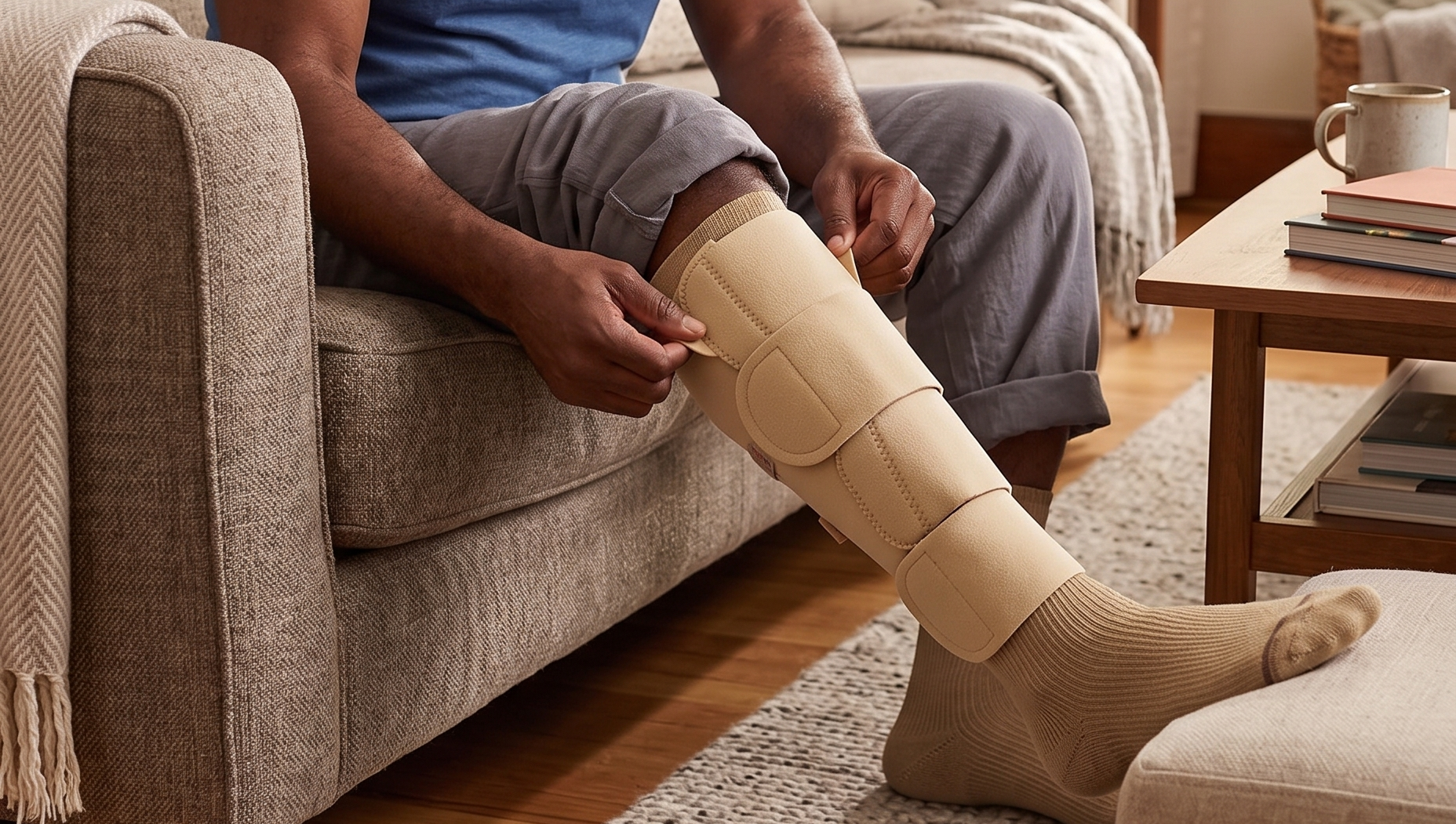
Lymphedema Support: A Guide for DME Providers
In the course of an eight-year medical degree, the average physician receives only 30 to 45 minutes of training on the lymphatic system. This is a staggering educational gap for a system that serves as the body’s primary mechanism for removing toxins and waste.
Because the lymphatic system isn’t visible at a macro level like the vascular system, it remained a clinical enigma until the Starling Principle uncovered the mechanics of how it operates within the human body. Today, lymphedema is moving from a medical mystery into a high-growth clinical area.
What is Lymphedema?
To understand the clinical necessity of the equipment, one can visualize the lymphatic system as a boat traveling through a canal. The system relies on valves or gates to push fluid forward. As we move, our muscles, specifically the calf muscles, act as a pump, forcing lymphatic fluid through these gates. When this system is impaired, fluid pools, leading to edema (swelling).
Lymphedema arises from two primary causes:
- Age or Reduced Mobility: Older patients or those with decreased activity may experience slowed lymphatic flow, leading to swelling, most commonly in the legs.
- Surgical Lymph Node Removal: Cancer survivors, particularly breast cancer patients and approximately 90% of head and neck cancer patients, often develop lymphedema in the upper body. This can cause internal swelling that impairs breathing or speaking.
By anatomical location, approximately 80% of cases affect the legs, while 20% affect the upper body.
Treatment follows a progression: Manual Lymphatic Drainage (MLD) therapy, followed by Compression Garments, and finally Pneumatic Compression Devices (PCD). When billing these devices, the distinction is critical:
- E0651 (Basic Device): Treats the limbs only (arms or legs) by pushing fluid toward the core.
- E0652 (Core/Trunk/Vest): A more advanced modality that treats the torso and trunk.
Clinically, the goal of the E0652 is to clear the core first, creating a pathway so that fluid pushed from the limbs has somewhere to go. While the Lymphedema Treatment Act recently mandated Medicare coverage for these items, the transition from cash-pay to a covered benefit has created significant data management challenges.
The Billing Complexity
Congress mandated a one-year rollout for this complex category, a strong race that has left DMEs navigating a landscape riddled with operational traps.
1. Managing HCPCS Complexity
The industry jumped from zero coverage to over 80 new HCPCS codes almost overnight. Within those 80 codes are thousands of individual part numbers and SKUs. For a DME, managing this volume of data without specialized tools is a recipe for administrative chaos.
2. The Absence of an LCD
Unlike respiratory or orthopedic categories, there is currently no formal Local Coverage Determination (LCD) for compression garments. Without a clear roadmap, DMEs are operating on documentation guesswork, relying solely on a lymphedema diagnosis and vague medical necessity justifications. This lack of policy creates a high risk of claim denials.
3. Measurement Documentation and Specification Gaps
Prescriptions frequently arrive without complete sizing or fit specifications. Even when measurements are included, inconsistent labeling creates ambiguity. Without clarity on whether notes use centimeters or millimeters, a single unit misinterpretation can result in an incorrect garment fit and an unbillable claim.
4. Medicare Requirements for Cash Transactions
Medicare-contracted suppliers face specific requirements around cash transactions. If a patient wants to pay out of pocket for a $50 garment, the DME must still obtain a prescription and a signed waiver. This ensures Medicare doesn't pay for an item the patient has already purchased separately, but it creates friction for what should be a straightforward transaction.
Some DMEs have responded by establishing non-contracted e-commerce subsidiaries to handle cash sales, which sidesteps these requirements but introduces legal complexity. The challenge with this system is compression garments are daily-wear items that require frequent replacement and rotation for hygiene and durability, yet coverage policies have historically been restrictive. Early coverage discussions limited reimbursement to one garment per week, which didn't align with the practical reality of patient needs.
Managing Volume and Complexity: How Automation Bridges the Gap
Compression garments require frequent reordering. Patients need multiple garments for different times of day and regular replacements due to wear. This creates a higher claim volume than one-time capital equipment categories, which presents both an opportunity and an operational challenge.
Automation tools can help manage this volume by reducing manual touchpoints and the likelihood of errors. A qualification tool includes features like:
- Diagnosis Verification: Confirming the required lymphedema diagnosis is documented in the medical record.
- Quantity Tracking: Monitoring whether a patient has reached their annual garment allowance.
- Measurement Standardization: Flagging inconsistent measurement notation so sizing is clear before a part number is selected.
What's Next for Lymphedema Coverage?
The current state of lymphedema billing is evolving. We expect a formal LCD to be implemented within the next 12 to 24 months, which will likely establish clearer criteria before garments or PCDs are approved for coverage.
The LCD will provide needed clarity on coverage requirements, but how providers respond will depend on their volume, resources, and business model. For those committed to compression garments, automation tools will be essential for managing complexity and compliance. For others, the category may simply not fit their operational priorities.