

A Guide to Canes, Crutches, and Walkers
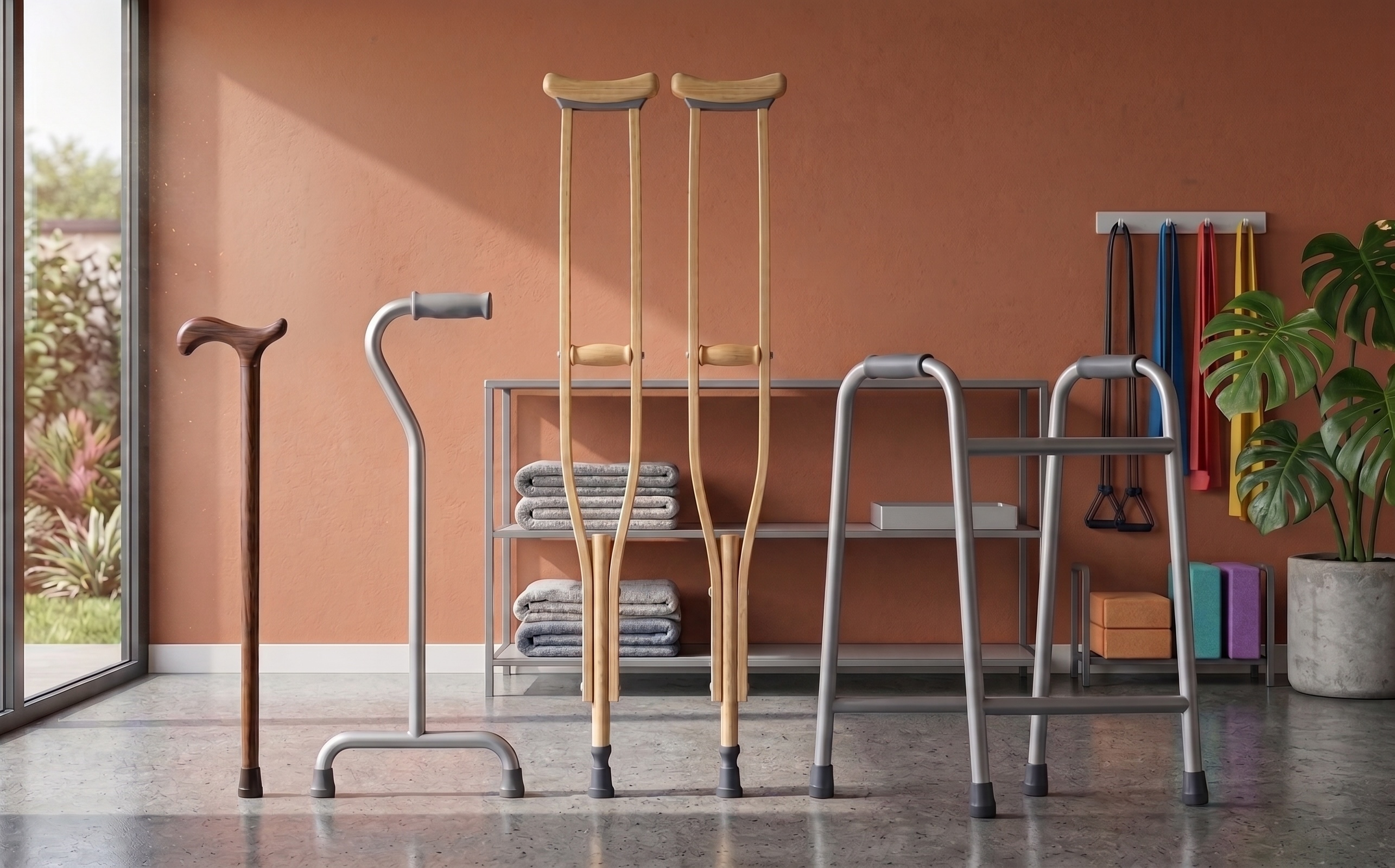
For most, movement is an afterthought: a seamless loop of signals firing from brain to muscle to guide our every step. That changes in an instant when an injury or age-related decline makes a simple walk across the kitchen feel like a challenge. At that moment, the sudden necessity of an assistive device transforms a simple device into an essential lifeline.
Currently, 6.1 million Americans rely on this equipment to navigate their daily lives. This article looks under the hood of the canes, crutches, and walkers industry to reveal the process behind reaching the people who need them.
The Demographic Divide
Data shows that 40% of adults over the age of 65 will require a mobility aid at some point in their lifetime. However, the demographic most likely to be seen with a walker is women.
This disparity is driven by three specific clinical and demographic factors:
- A longer average life expectancy
- Higher rates of osteoporosis
- Significantly higher incidences of hip fractures
As the population ages, these devices serve as the primary tool for maintaining community and home-based independence for this group.
The Hierarchy of Stability
The differences between a cane, a set of crutches, or a walker boils down to the level of weight-bearing support and neurological stabilization required.
- Canes: Represent the lower end of assistance, primarily used to improve balance and stability. A cane typically offloads 15% to 25% of a patient's body weight.
- Crutches: Used for patients who are non-weight bearing or require toe-touch weight bearing. This requires upper-body strength to compensate for a lower-extremity limitation, such as a broken ankle.
- Walkers: Provide maximum stability and are indicated for patients with bilateral weakness or significant balance issues.
For neurological patients, these tools address the vestibular system. When a patient's coordination is compromised, the device provides the sensory feedback necessary to prevent a fall. A simple mobility aid also serves as the ultimate clinical entry point for identifying broader patient needs. Specific gait patterns and limitations often signal deeper comorbidities that require more advanced intervention.
When are Walkers Needed?
The clinical pathways leading to a walker prescription are often the result of either sudden trauma or long-term systemic decline. Whether for temporary post-op recovery or chronic management, the prescription serves as the primary tool for fall prevention.
The primary drivers of walker usage include:
- Acute Orthopedic Events: Immediate post-operative stabilization is essential for patients following hip or knee replacements or lower extremity fractures.
- Chronic Musculoskeletal Degeneration: Osteoarthritis (OA) remains the primary driver of mobility aid usage, affecting approximately 32 million Americans and causing the progressive weakness that necessitates a transition to robust support.
- Neurological Conditions: Approximately 1 million Americans with Parkinson’s, MS, or stroke recovery requirements utilize these aids to manage specific gait patterns and coordination challenges.
- Balance and Vestibular Disorders: Conditions that affect balance, including vertigo and the emerging impact of Long COVID, require the maximum stability provided by a walker to maintain patient safety.
Stock and Bill Model
Most patients don’t buy their mobility aids at a retail pharmacy. Instead, they receive them directly from their physician via a Stock and Bill model.
In this arrangement, manufacturers and distributors stock closets within medical offices with canes, crutches, and walkers. When a doctor dispenses an item, the paperwork is sent back to the manufacturer, who then handles the insurance claim. This ensures immediate dispensing at the point of care, which is critical for patient safety and compliance.
Because these are high volume, low dollar items, manufacturers often skip the lengthy medical record review otherwise required for expensive equipment. To work around delays, they often start the authorization process the same day the item is dispensed. Manufacturers take the risk of dispensing immediately, knowing that a small percentage of claims may be denied and written off as a loss.
Billing Rules and Regulations
One of the most significant challenges when navigating Medicare for mobility aids is the Same and Similar rule. This rule limits a patient to one device every five years, even if the patient progresses from a cane to a walker, unless a major change in medical condition is documented.
For a mobility aid claim to be approved, medical notes must explicitly state that the patient was ambulatory before their injury and, crucially, that the patient is expected to walk again after healing. Despite a patient clearly being non-weight-bearing after a major surgery, the system requires a written affirmation of their potential to walk, a detail that applies to 98% of the population but remains a frequent point of denial.
Low-Dollar Losses, High-Margin Relationships
A standard walker costs approximately $10 to manufacture while billing insurance around $40. Because of these thin margins, DME companies are willing to take these basic ambulatory aids as a loss. Rather than acting as a primary revenue driver, stocking canes, crutches, and walkers is a strategic play to secure highly coveted supply closet space inside hospitals and orthopedic clinics. By maintaining this physical footprint, providers guarantee they remain the exclusive partner for high-margin orthopedic products, like custom-fit knee braces, AFOs, and bone growth stimulators.
Because preserving this clinic relationship is paramount, manufacturers will eat the cost of insurance denials on low-dollar items rather than spend administrative hours appealing them. Under standard stock-and-bill agreements, if a clinic hands out a device but loses the patient's paperwork, they are required to pay the provider for the equipment at-cost. Ultimately, navigating these low-dollar administrative headaches is simply the cost of doing business; without them, a competitor will quickly claim the clinic closet and take the high-value orthopedic pipeline with them.
Behind Every Step
While canes, crutches, and walkers are often viewed as low-tech commodities, they matter to millions. A doctor handing out a walker looks like a straightforward transaction, but it's the result of a carefully designed system balancing logistics, margins, and patient needs. This system is what keeps this ever growing population moving.