

Medicare Coverage for Blood Glucose Monitors
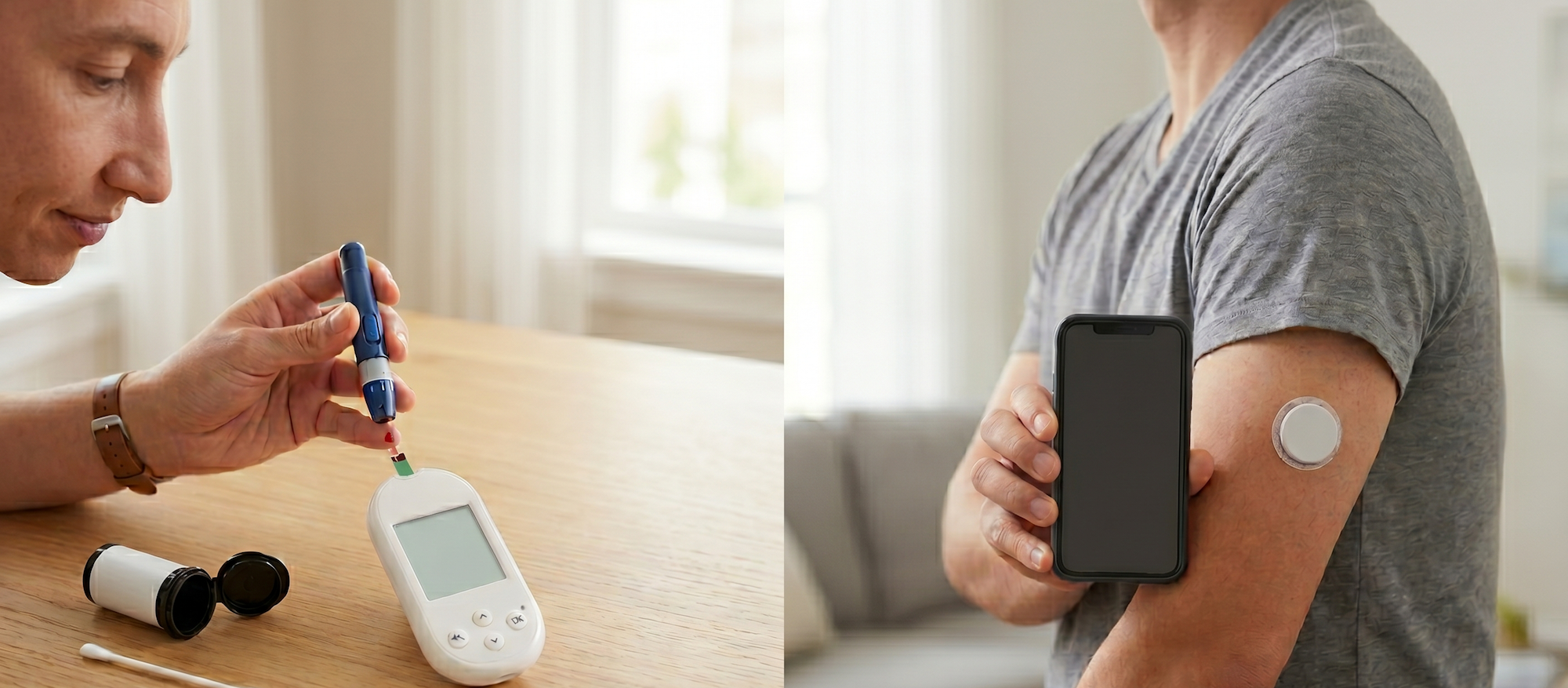
Medicare coverage for blood glucose monitors is one of the most commonly misunderstood areas of DME billing. Patients call asking if Medicare will cover their new continuous glucose monitor. Providers submit claims only to get denied for missing documentation. Billing specialists spend hours chasing down prior authorizations that should have been obtained upfront.
The reality is blood glucose monitoring devices, both traditional glucometers and modern continuous glucose monitors, have very specific Medicare billing rules.
To better understand glucose monitoring billing, take a closer look at the specific Medicare requirements for BGM and CGM, where claims typically fail, and how to build a compliant process.
Does Medicare Cover Glucose Monitors?
Yes, when they're medically necessary for patients managing diabetes. But coverage differs significantly based on device type.
Medicare recognizes two distinct device categories. Each has different coverage rules. Each has different coding requirements. Each has different medical necessity standards.
What Brand of Glucometer Is Covered by Medicare?
Medicare doesn't maintain a specific "approved brands" list for glucose monitors. Instead, Medicare coverage depends on whether the specific device meets their definition of durable medical equipment and the claim is supported by proper documentation.
Common brands covered include Contour, OneTouch, Accu-Chek, and FreeStyle, but brand coverage can vary by individual payer policy and whether Medicare Advantage plans impose restrictions.
What matters more than brand is that the device is FDA-approved, it’s medically necessary for the patient's condition, and it’s properly coded and documented.
Core Billing Rules for BGM (Blood Glucose Monitoring)
Blood glucose meter billing follows strict Medicare protocols.
Key HCPCS Codes for BGM
- E0607: Standard blood glucose monitor
- E2100: Blood glucose monitor with voice synthesizer
- E2101: Blood glucose monitor with integrated lancing mechanism
- E2104: Blood glucose monitor with integrated blood sampling mechanism
Test strips and lancets (used for the fingerstick) bill separately:
- A4253: Blood glucose test strips (box of 50)
- A4255: Blood glucose test strips (box of 100)
- A4256: Blood glucose control solution
- A4257: Blood glucose test strips for meter (box of 50)
- A4258: Blood glucose test strips for meter (box of 100)
- A4259: Lancets (box of 100)
- A4271: Cartridge with integrated lancing (50 tests per unit)
BGM Supply Utilization Limits
Medicare limits BGM supplies based on insulin treatment status:
- Non-insulin patients: Up to 100 test strips and 100 lancets per 3 months
- Insulin-treated patients: Up to 300 test strips and 300 lancets per 3 months
Higher utilization requires documentation. Within 6 months prior to ordering, the treating practitioner must conduct an in-person or Medicare-approved telehealth visit to evaluate diabetes control and document that the higher quantities are medically necessary.
Documentation Essentials for BGM
For blood glucose monitors to be covered, Medicare requires:
- Physician's order (diabetes diagnosis, monitoring frequency)
- Medical records (diagnosis, treatment plan, A1C or clinical evidence)
- Proof of delivery
- For replacement supplies: proof meter is non-functional or supplies not received in allowable period
- Modifier: All BGM claims must include modifier KX (insulin-treated) or KS (non-insulin treated).
Core Billing Rules for CGM (Continuous Glucose Monitoring)
Continuous glucose monitor billing is more complex than BGM. These devices require more intensive documentation and have stricter frequency limitations.
Key HCPCS Codes for CGM
CGM Device Codes:
- E2103: Non-adjunctive continuous glucose monitor (can be used alone to make treatment decisions without confirming with a BGM)
- E2102: Adjunctive continuous glucose monitor (requires confirmation with BGM before treatment decisions; typically integrated into insulin infusion pump)
CGM Supply Allowance Codes:
- A4239: Supply allowance for non-adjunctive CGM (includes all sensors, transmitters, and related supplies)
- A4238: Supply allowance for adjunctive CGM (includes all sensors, transmitters, and related supplies)
Medical Necessity Criteria for CGM
Medicare requires specific clinical documentation to prove a patient needs continuous monitoring rather than traditional fingerstick monitoring.
Medical necessity for CGM typically requires:
- Diagnosis: Type 1 OR Type 2 diabetes on insulin with hypoglycemia/glycemic variability
- Clinical evidence: A1C results, documented severe hypoglycemic episodes, proof of BGM trial failure
- Hypoglycemia specifics: Level 2 events (<54 mg/dL) despite medication adjustments OR at least one Level 3 event requiring third-party assistance
- Proof of trial and failure: Documentation showing BGM monitoring was attempted and did not achieve glycemic control
- Prescriber documentation: Clear statement of medical necessity tied to clinical evidence
- In-person or telehealth visit: Repeated every 6 months for continued coverage to document adherence and ongoing medical necessity.
- Modifiers: CG modifier required for all CGM claims. KF modifier is also required for adjunctive CGM.
CGM Supply Frequency & Coverage Limits
Supply Allowance Billing:
- The supply allowance for CGM (A4238 or A4239) is billed as one unit of service per 30 days. Suppliers may bill up to 3 units of service per 90 days at a time. Billing more than 3 UOS per 90 days will be denied as not reasonable and necessary.
Supply Continuity Requirement:
- Suppliers must ensure sufficient supplies remain on hand to last a full 30 days before billing the supply allowance. If insufficient supplies remain, additional supplies must be provided before the next monthly allowance can be billed.
Top Reasons for Denials & How to Avoid Them
Most CGM and BGM denials boil down to preventable documentation errors. The most recent CMS data on improper payments shows three primary denial drivers:
Lack of Interpretation Documentation
Many CGM denials trace to missing documentation of the clinical decision-making behind the prescription. Providers who sign off without distinct reasoning leave gaps. Strong documentation ties clinical evidence directly to why a continuous monitor improves outcomes.
How to avoid it: Before delivery, have the prescribing physician send detailed clinical justification. Request office notes showing recent labs, glucose readings, and why traditional monitoring has failed.
Frequency Limits
Medicare has strict frequency limits for CGM supply delivery. Most sensors are billed monthly, up to 3 months at a time. The confusion typically happens because patients use their sensors more frequently than the monthly limit or billing staff submit duplicate claims within the same month. Claims also deny when supplies overlap with inpatient or SNF stays.
How to avoid it: Track sensor delivery dates and verify the patient's location before submitting. Most DME billing software flags frequency violations, but spreadsheets and manual tracking miss these easily. Ensure gaps between supply refills are at least 28-29 days to comply with Medicare's 30-day unit of service requirement.
Prior Authorization Failures
Prior auth decisions take 5-10 business days, but patients want their device immediately. The temptation to deliver first and deal with authorization later is understandable, but that approach backfires quickly.
When authorization is denied, common reasons include:
- Missing medical necessity documentation
- Patient hasn't tried conventional BGM first
- A1C levels don't meet the threshold for medical necessity
- Prescriber credentials or NPI number is missing from the authorization request
How to avoid it: Submit prior authorization requests the same day you receive the physician order. Follow up within three business days if you haven't received a decision. Appeal denied prior authorizations with additional clinical evidence rather than resubmitting the same paperwork.
How Top CGM Providers Keep Operations Running Smoothly
Successful CGM operations prioritize keeping patients supplied without interruption while staying compliant. That's where automation makes the difference.
Notable Systems' Claims Manager handles the complexity of glucose monitoring billing by verifying over 25 unique HCPCS codes against payer-specific requirements before claims leave your office. Compliance issues surface early, denials drop, and clean claim rates stay strong, even as CGM prescriptions grow.
Ready to streamline your CGM operations? Book a demo to see how Claims Manager works.